From Connectivity to Engagement: Weaver Labs and Piing Transform Halftime at Stadium MK
By Weaver Labs
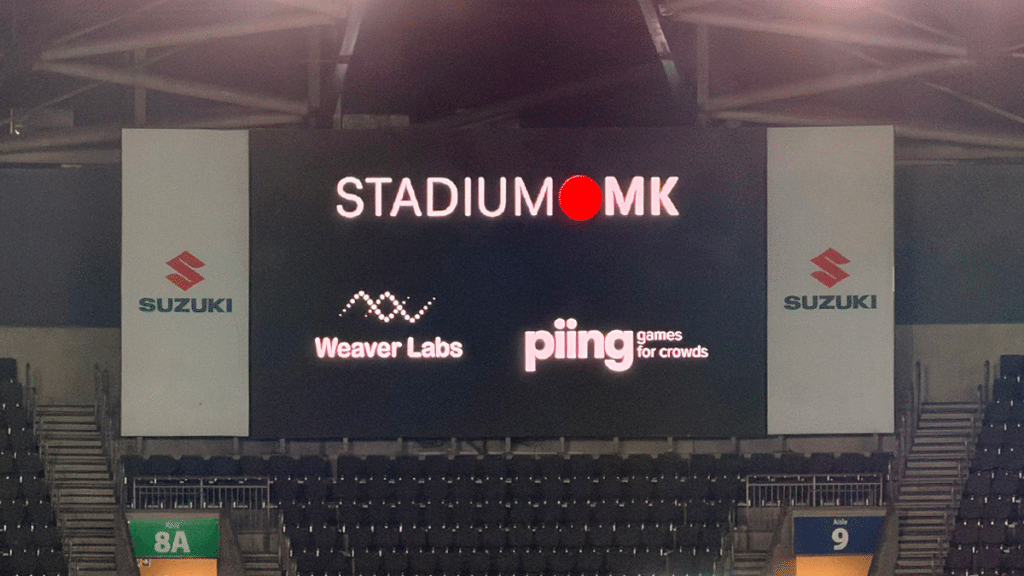
At Weaver Labs, we believe a truly smart stadium isn’t defined by cables, antennas, or signal bars; it’s defined by what connectivity enables. A smart venue is one where digital infrastructure acts as a platform, allowing immersive experiences, real-time interaction, and innovative ways for fans to engage with the matchday experience. On February 17th, we partnered with Piing at Stadium MK to deliver a live activation that turned hundreds of spectators into active participants during halftime.
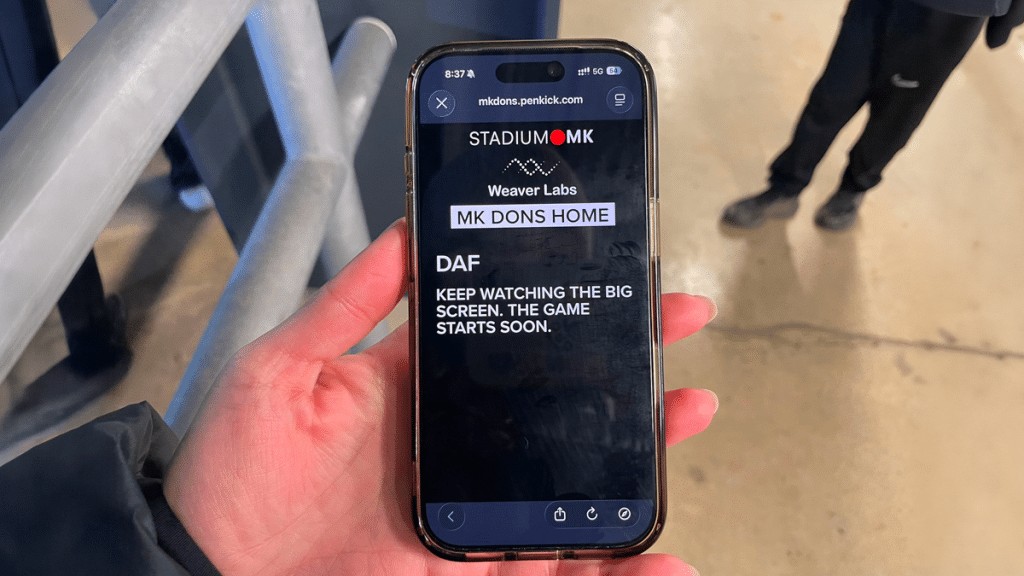
This activation highlighted how effective partnerships can elevate the fan experience. Piing’s award-winning crowd gaming technology is built for mass participation, allowing fans to play together using their mobile devices, with every action reflected in real time on the big screens. By collaborating with Piing, Weaver Labs was able to provide the reliable, high-performance connectivity and network orchestration software needed to ensure the experience ran smoothly for every participant. Our platform doesn’t just support a single app; it can manage multiple high-demand, low-latency applications simultaneously, making a stadium’s digital infrastructure scalable, flexible, and future-proof.
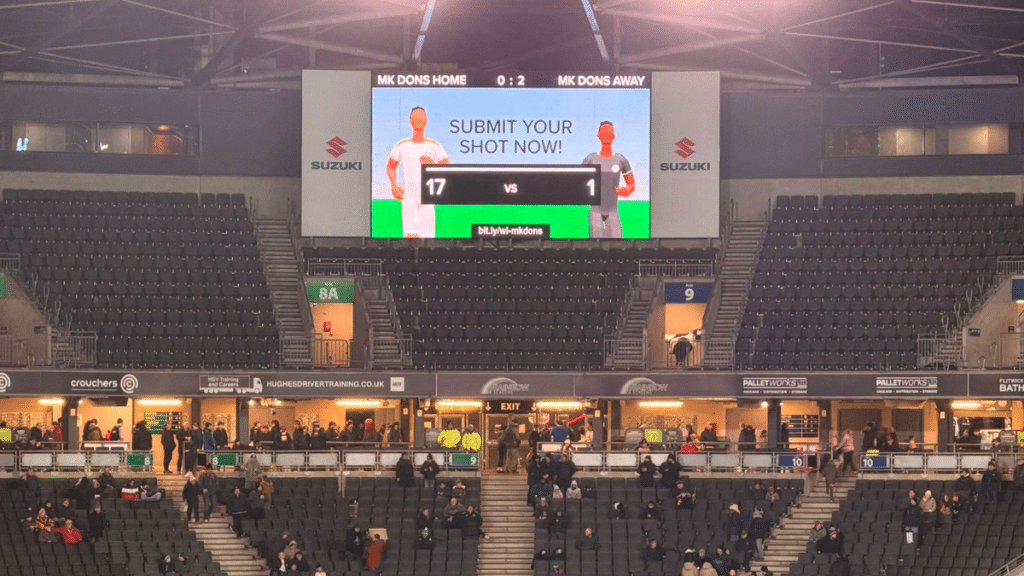
During halftime, trial participants took part in a stadium-wide penalty shootout, each taking three shots. The big screen came alive as all of the kicks were displayed simultaneously, creating a shared digital moment across the venue. The competition added an extra layer of excitement, with participants vying for the top score and the chance to claim two hospitality tickets at the end of the game. The result was more than entertainment; it demonstrated how connectivity and innovative fan-engagement tools can combine to create collective experiences that are both fun for fans and valuable for clubs.
This partnership also showcases the broader benefits of Weaver Labs’ approach to stadium infrastructure. By providing a software-defined orchestration platform, we enable venues to deploy and manage as many applications as they want, whether that’s Piing today or future high-bandwidth, low-latency experiences tomorrow. While we don’t create the apps ourselves, our infrastructure ensures that they can run reliably at scale, giving clubs and sponsors the confidence to innovate, engage audiences, and collect meaningful insights through first-party data.
The success at MK Dons marks just the beginning of what is possible when technology partners work together to enhance the matchday experience. As Weaver Labs continues to expand its ecosystem, we remain committed to enabling venues to innovate, scale, and monetise their connectivity assets, providing the foundation for interactive, high-energy fan experiences now and in the future.
Last week, Weaver Labs hosted Stadiums of the Future 3.0, a 45-minute deep dive into what it takes to bring modern, smart venues to life. Led by Peter Marshall (Business Development, Weaver Labs), our panel brought together experts spanning AI, telecoms infrastructure, live media, and cloud orchestration: If you missed the live session, here are […]
Sports venues often struggle with advanced digital applications because rigid, legacy network hardware cannot handle peak fan demand. To solve this, stadiums must adopt an open, software-defined network infrastructure that seamlessly integrates fragmented data silos. By transforming connectivity into agile digital real estate, venues can unlock greater operational efficiency, data sovereignty, and significant new revenue […]
The live entertainment industry has reached a point where the physical experience on the field or stage is only half the story. The other half happens in another reality that is becoming embedded in everything we do –the screens in the palm of every spectator’s hand. Fans expect to interact with the event –whether that […]
This article marks the conclusion of our series on the digital evolution of modern venues where we shift from identifying the problem to executing the solution. If our previous articles established that technology is no longer a utility but a strategic asset, and that infrastructure is the engine of ROI, this final piece outlines the […]
In the second part of our three-part series, we move beyond connectivity as an asset to explore the ‘Translation Gap’; the critical divide between collecting stadium data and converting it into commercial fuel. In our previous discussion, we addressed the “Shiny Object” trap; the tendency to prioritise high-tier applications over the foundational infrastructure required to […]
This is the first in a three-part series exploring why connectivity has evolved from a back-office utility into a stadium’s most powerful commercial engine. In the modern sports and entertainment landscape, the pursuit of innovation is relentless. Stadium operators are under immense pressure to deliver the “stadium of the future,” leading to significant investments in […]