Fan experience is no longer just a buzzword — it’s the heart of modern stadium operations. With technology advancing at an unprecedented pace, fans expect more than just a game; they demand a seamless, immersive, and connected experience. This shift has forced stadiums to rethink their role — not just as venues for sport but as entertainment ecosystems where every touchpoint, from ticketing to post-match engagement, is carefully designed to enhance fan satisfaction.
A few months ago, Weaver Labs set out on a mission to understand the current state of UK stadiums, from giants like Old Trafford to smaller venues like Kenilworth Road. Through site visits, stakeholder conversations, and industry research, we uncovered valuable insights into their pain points, priorities, and opportunities for innovation.
Venues, like any other business, need to find ways to boost performance and keep operations running smoothly. For stadiums, this means discovering sustainable ways to finance teams and manage day-to-day activities. While expanding capacity through additional seating or new buildings is one option, it’s not the only path to revenue growth –and certainly not the cheapest either–. A key focus should be on enhancing their digital footprint — creating seamless, scalable revenue streams that don’t rely on physical expansion. This approach goes beyond simply monetising networks; it’s about fostering sustainability and long-term value.
Let’s dive deeper into how this can be achieved.
Stadiums as the Beating Heart of Sport
In the UK, sports — especially football — is more than entertainment; it’s a way of life. Countless films and stories capture the passion football and rugby supporters have for their teams, both local and national. This deep-rooted love is what fuels clubs and stadiums alike. Stadiums aren’t just buildings; they are the sacred grounds where history is made and where fans connect with their teams and with each other.
Some of the world’s oldest football stadiums are in the UK, with Sandygate Stadium in Sheffield being the longest-running football ground in use since 1804. Whether a club plays in the Premier League, the EFL, or the National League, the stadium remains the epicentre of fan engagement. However, stadiums are also businesses — they must grow, generate revenue, and stay competitive in a rapidly changing world.
The Connectivity Gap: A Barrier to Growth
While many stadiums have focused on enhancing seating, hospitality, and entertainment options, one fundamental aspect often remains overlooked: connectivity. Poor network infrastructure leads to frustrated fans, missed commercial opportunities, and operational inefficiencies. When thousands of people converge in one place, the demand on networks skyrockets, yet most stadiums struggle to provide seamless, high-speed connectivity.
That’s where Weaver Labs comes in. When we founded the company in 2018, our mission was to decentralise the Internet and empower telecom infrastructure owners to share and monetise their assets. Why? Because the traditional telecom business models no longer align with the growing demand for connectivity. The current supply simply can’t keep up, and to fix this, we need more players, more investment, and — most importantly — more collaboration across industries.
That’s why we built Cell-Stack — a software orchestration tool that deploys, manages, and monitors networks on dedicated or shared cloud infrastructure. Simply put, it enables robust, seamless connectivity without the need for additional infrastructure and can be deployed in hours instead of days, all with zero-touch automation.
Monetising Stadium Connectivity: The Next Revenue Stream
Beyond improving fan experience, connectivity presents a massive commercial opportunity for stadiums. Through Cell-Stack, stadiums can unlock new revenue models that were previously unattainable, including:
- Premium 5G Packages: Offering tiered 5G access with exclusive content, betting integrations, and VIP-only services.
- Real-Time Engagement Apps: Stadiums can host their own interactive fan experiences, from live polls to fantasy leagues, without relying on third-party platforms.
- Data-Driven Hospitality & Retail: Connected infrastructure enables smarter food & beverage services, reducing queues and maximising revenue per attendee.
- Sponsorship Activation: By integrating real-time digital advertising and interactive sponsor content, stadiums can create more valuable partnership opportunities.
- And many, many more.
Learning from the Best: Tottenham Hotspur Stadium’s Success
One of the best examples of how technology is redefining stadium experiences is Tottenham Hotspur Stadium. Recognised as the Best Fan Experience Stadium in the UK by Mondo Stadia at the 2023 World Football Summit (WFS), this £1 billion venue has set new benchmarks for innovation.
From a microbrewery capable of producing 10,000 pints per minute to the world’s longest bar, Tottenham Hotspur Stadium isn’t just about scale — it’s about enhancing every aspect of the fan experience. With over 60 food outlets, premium seating, and historical tributes, it seamlessly blends tradition with modern technology.
What makes it stand out is its connectivity-first approach. The stadium boasts cutting-edge network infrastructure that powers digital ticketing, frictionless payments, and immersive match-day experiences. Fans can stream replays, access real-time stats, and engage with exclusive content directly from their phones — effortlessly.
Making Technology Accessible to All Stadiums
However, not every stadium has a £1 billion budget or for that matter, over 60K seats in their venues. Many EFL stadiums operate with limited resources, and they shouldn’t be left behind. Smaller clubs often innovate more efficiently because they must find creative ways to stay competitive. This is where Cell-Stack makes the difference.
Through our enhanced private network solution, we empower stadiums to host applications on top of their connectivity, opening up new revenue streams without heavy infrastructure investment. But not just that, we also bring in trusted partners to make applications integration faster and seamless.
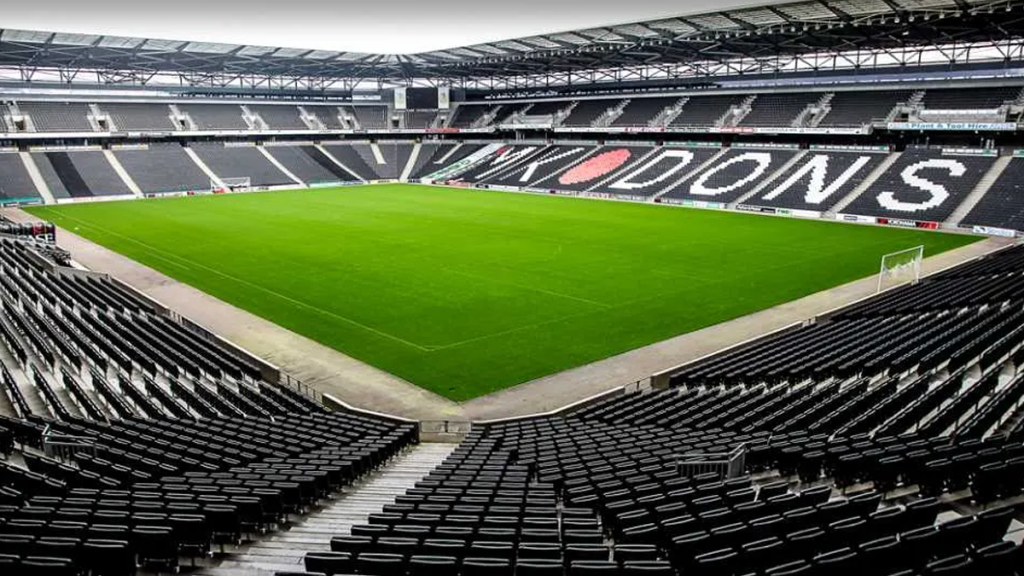
A Vision for Smarter Stadiums Happening in MK Dons Stadium
Imagine stepping into MK Dons Stadium, where cutting-edge technology transforms every moment of your matchday. No more waiting in long queues — simply order food via an app and have it delivered to your seat or receive a precise pickup alert. Need a restroom break? Real-time navigation directs you to the nearest available facility. And when the final whistle blows, a smart exit guide helps you avoid post-match congestion with ease.
But what if fan engagement could go even further? Picture a multi-angle live stream on your phone, packed with in-depth stats, instant replays, and AI-driven insights — all powered by seamless connectivity.
This isn’t just a vision — it’s happening now.
We’re currently launching an app that offers fans the ability to browse different streams from multiple angles. It will also offer game updates, AI-powered insights, and an interactive chatbot to take the fan experience to the next level. In the future, we plan to integrate real-time mapping for even greater convenience and engagement. This app will be tested in the coming weeks, and we’re excited to share the update with you!
Turning Innovation into Action: The Power of Cell-Stack
At Milton Keynes Dons FC, in collaboration with partners Samsung, Capgemini, University of Bristol, Satellite Applications Catapult, Milton Keynes Dons Stadium, Offshore Renewable Energy Catapult, and Madevo we are redefining stadium connectivity through Project ARANA. Backed by the £3.6m Future Telecoms Challenge, this initiative is deploying Cell-Stack to unify 5G, fibre, and satellite networks, giving the stadium full control over its telecom infrastructure.
With AI-driven network optimisation, MK Dons can ensure seamless, high-quality connectivity, no matter the demand. The benefits go beyond just fan experience — this technology unlocks new revenue streams, enabling the stadium to commercialise its network and offer on-demand telecom services to event organisers, sponsors, and partners.
Live demonstrations in March will showcase how this next-gen network is revolutionising stadium operations, fan engagement, and commercial growth. MK Dons isn’t just keeping up with the future — it’s setting the standard for it.
The Future of Stadiums is Here
Technology is no longer an afterthought — it’s the backbone of modern stadium operations. Fans expect seamless digital experiences and stadiums that fail to adapt risk falling behind. By embracing connectivity as a business enabler, stadiums can unlock new revenue streams, enhance fan engagement, and future-proof their operations.
At Weaver Labs, we’re not just building networks — we’re enabling stadiums to monetise their connectivity and redefine fan experiences. The future of stadiums isn’t just about what happens on the pitch; it’s about what happens off it — and it starts with better connectivity.
Learn more about our deployment in MK Dons here.